
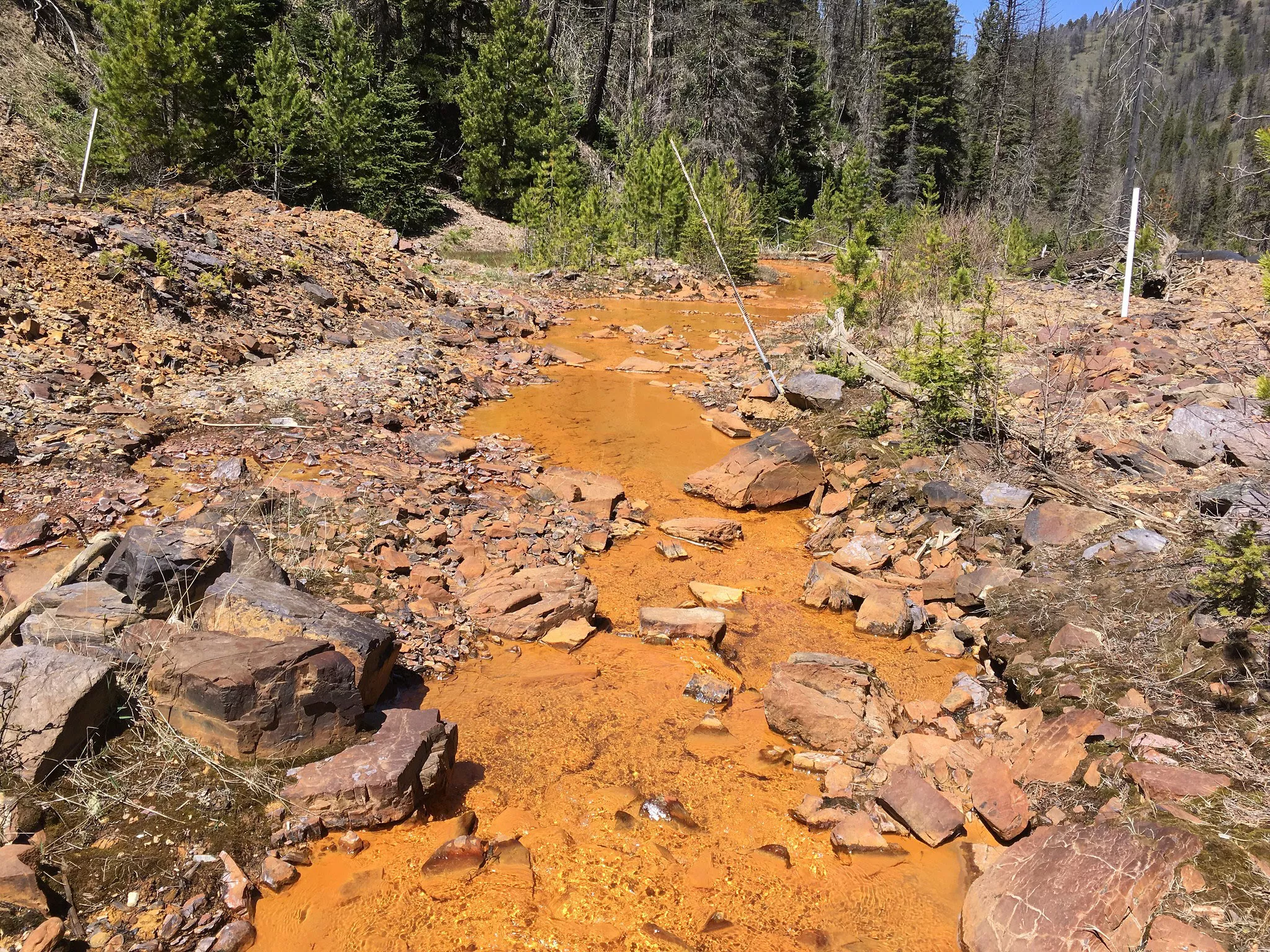
Pictured: Acid mine drainage from the Mike Horse Mine complex enters upper Blackfoot River watershed. These defunct mines are owned by ASARCO and ARCO, with clean-up operations occurring through State Superfund program. Water treatment will be required in perpetuity.
How Does Acid Mine Drainage Form?
At metal mines, the target ore (like gold, silver, copper, etc) is often rich in sulfide minerals. When the mining process exposes the sulfides to water and air, together they react to form sulfuric acid.
This acid can dissolve other harmful metals and metalloids (like arsenic) from the surrounding rock.
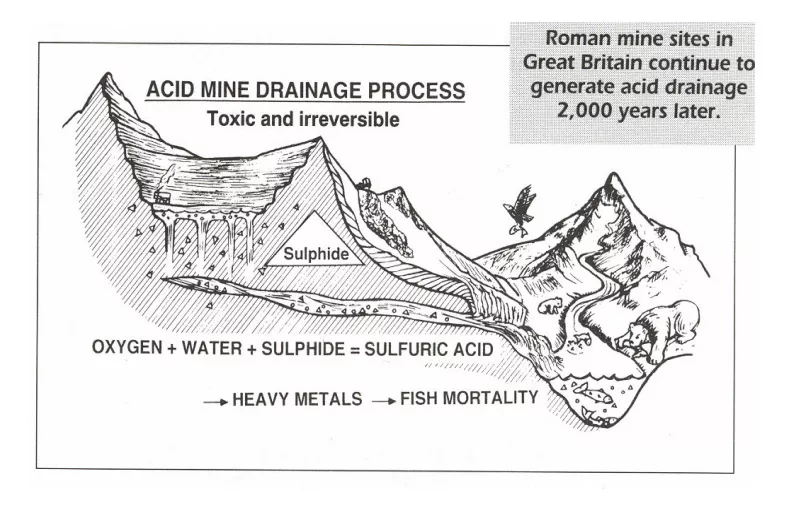
Acid mine drainage can be released anywhere on the mine where sulfides are exposed to air and water — including waste rock piles, tailings, open pits, underground tunnels, and leach pads.
Acid drainage is often marked by “yellow boy,” an orange-yellow substance (visible in the photo on this page) that occurs when the pH of acidic mine-influenced water raises above pH 3 (approaching more neutral conditions), so that the previously dissolved iron precipitates out.
How Does Acid Mine Drainage Harm Fish and Other Aquatic Life?
Acid mine drainage can have severe impacts on fish, animals and plants. Many impacted streams have a pH of 4 or lower — similar to battery acid.
For example, acid and metals runoff from the Zortman Landusky mine in Montana has harmed biological life in a dozen streams in the Little Rocky Mountains.
Perpetual pollution
Acid mine drainage is especially harmful because it can occur indefinitely — long after mining has ended. A literature review on acid mine drainage concluded that “no hard rock surface mines exist today that can demonstrate that acid mine drainage can be stopped once it occurs on a large scale.”
Many hardrock mines across the western United States may require water treatment for hundreds to thousands of years, or “in perpetuity” as a result of acid mine drainage or metals leaching.
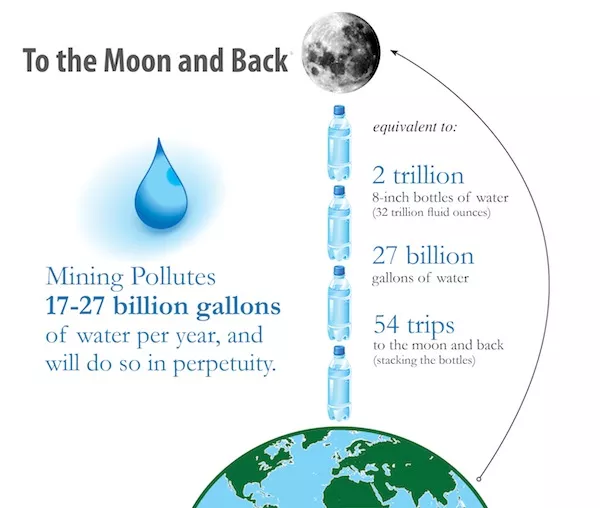
Earthworks released Polluting the Future in 2013, which highlights, for the first time, the staggering amount of our nation’s water supplies that are perpetually polluted by mining. It documents over 40 hardrock mines that will generate an estimated 17-27 billion gallons of polluted water every year, in perpetuity, and require costly water treatment.
Water treatment can be a significant economic burden to the public if a company files for bankruptcy or refuses to cover water treatment costs.
For example, acid runoff from the Summitville Mine in Colorado killed all biological life in a 17-mile stretch of the Alamosa River. The site was designated a federal Superfund site, and the EPA has spent over $210 million on clean-up.
For More Information
- Earthworks Fact Sheet: Acid Mine Drainage
- Earthworks Report: Polluting the Future: How mining companies are polluting our nation’s waters in perpetuity
- U.S. Fish and Wildlife Service: Acid Mine Drainage and Effects on Fish Health and Ecology: A Review Commissioned by the Anchorage office of USFWS to better determine the potential impacts of several proposed large mine projects in Alaska.